Facial Volume Treatments

Temple Consultation Melbourne

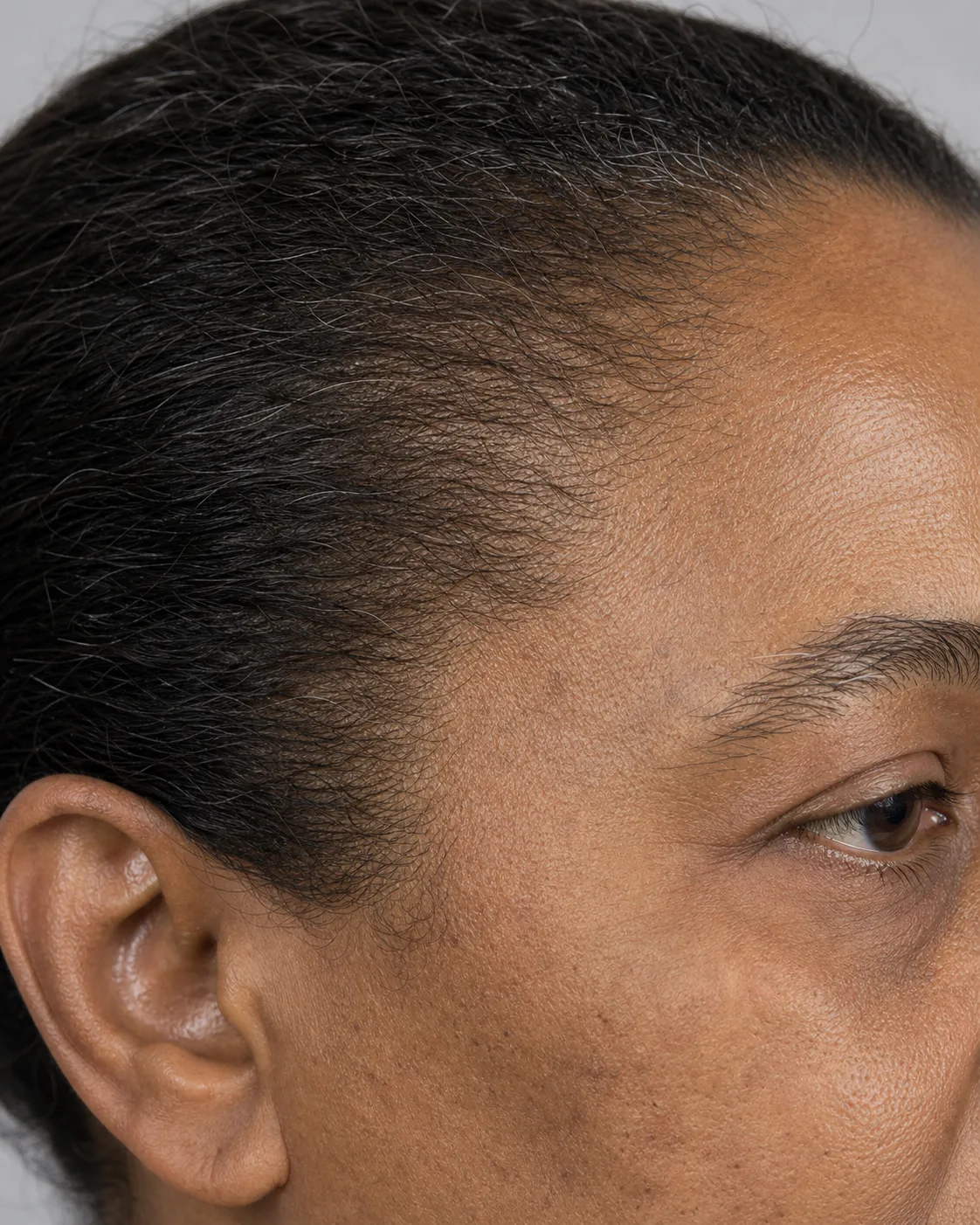
Temporal hollowing is one of the earliest and most often overlooked changes in the ageing face. At Core Aesthetics, temple assessment is part of a full upper face review, treatment is planned around your anatomy, not a standardised protocol.

Quick summary

Temple treatment in Melbourne addresses temporal hollowing — the concavity at the side of the skull caused by age-related fat pad loss. At Core Aesthetics, a consultation-first assessment determines whether volume treatment is the right approach for your upper face anatomy before any treatment is planned.

Temple hollowing is among the most clinically significant changes in the ageing upper face, yet it is frequently overlooked when patients and practitioners focus on more visible concerns such as nasolabial folds or lip volume. The temporal fossa, the curved depression at the side of the skull above the cheekbone, frames the lateral upper face and contributes substantially to how the eye, brow and forehead read from the front and in profile. When the fat pad and soft tissue within this region diminish, the result is a flattening or concavity that alters the upper facial silhouette in ways that affect perceived youth, weight, and vitality.

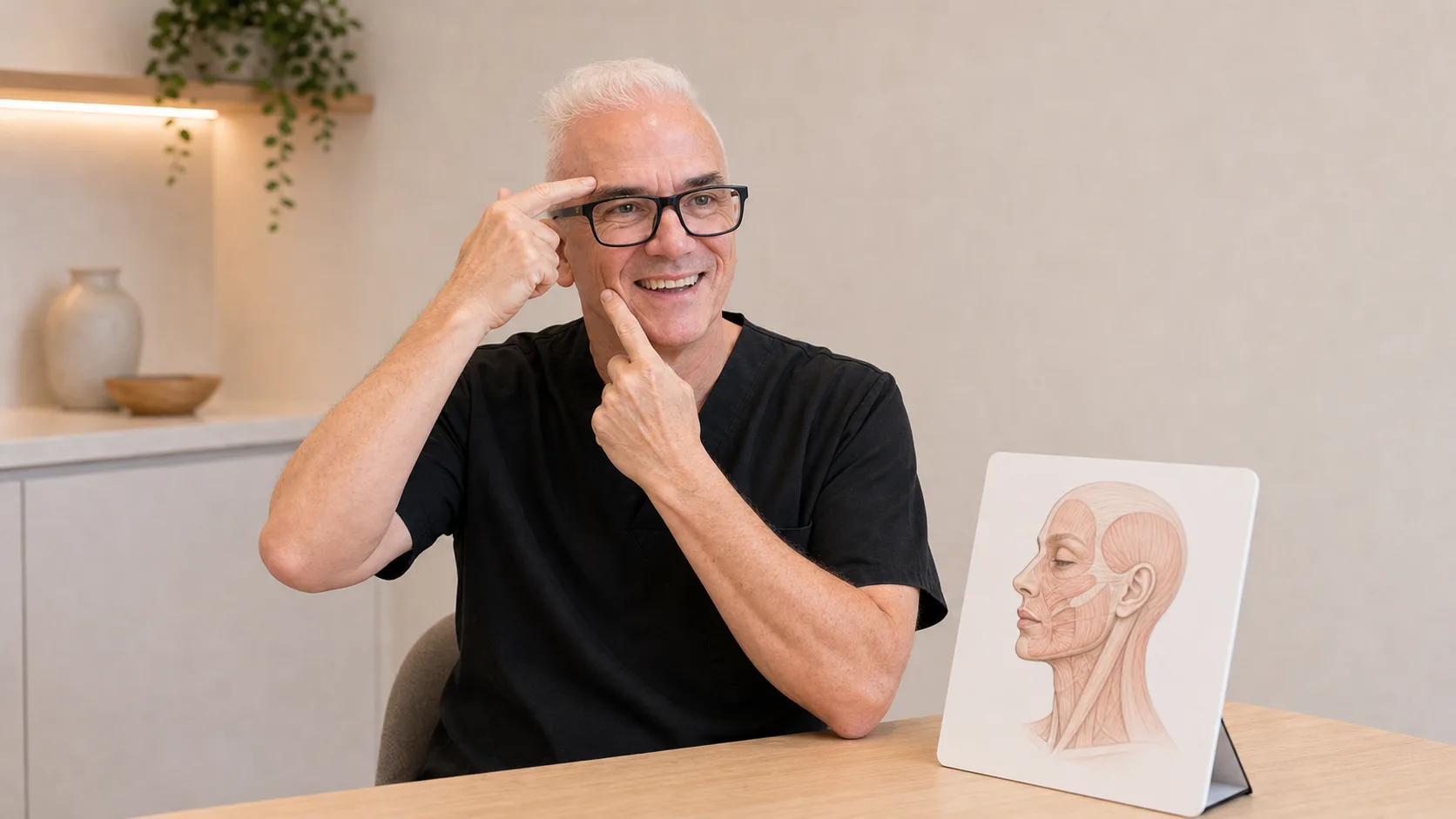
Corey Anderson, AHPRA registered nurse, assesses the temples as a routine component of every upper face consultation at Core Aesthetics. Whether your concern centres on the temporal region specifically or presents as a more general aged or drawn appearance, the temporal area is evaluated in the context of your full upper facial anatomy before any treatment is planned.

Why the Temple Region Ages Differently

The temporal region is composed of several distinct anatomical layers: the temporalis muscle, a layer of deep temporal fat, the superficial temporal fascia, a layer of superficial temporal fat, and the overlying skin. Each of these layers changes with age at a different rate, which is why temporal volume loss presents variably between individuals of similar age.

The deep temporal fat pad is one of the earliest facial fat compartments to atrophy significantly, often beginning in the late twenties or thirties. This is distinct from the pattern seen in the midface, where superficial fat compartments descend before they deflate. Temporal atrophy is largely a volume reduction process rather than a descent process, which means the structural deficit it creates does not respond to procedures designed to reposition tissue.

Bone resorption in the lateral temporal region contributes an additional layer of change over time, reducing the bony support against which the soft tissue rests. The combined effect of fat atrophy and bony change can produce a pronounced temporal hollow even in individuals who appear relatively youthful in the central face. This pattern is particularly pronounced in people with naturally prominent lateral cheekbones, where the contrast between the bony prominences and the hollowing above them is amplified.

How Temporal Hollowing Affects Facial Appearance

The visual consequences of temporal hollowing extend well beyond the temple area itself. Because the temporal region forms the lateral scaffold of the upper face, its deflation affects several adjacent structures in ways that are not always immediately recognised.

The most commonly reported effect is a skeletal or drawn quality to the upper face. When the temporal fat pad reduces, the skin at the side of the head becomes less supported, and the transition from the skull to the brow ridge becomes more pronounced. In profile, this creates a concave silhouette between the hairline and cheekbone where a gently convex or flat contour once existed.

Brow position can be affected indirectly. The lateral brow rests on a structural foundation that includes the periorbital fat and the tissue at the outer corner of the eye socket. When temporal volume diminishes, the lateral scaffolding for this area weakens, contributing to a heaviness or apparent descent of the outer brow that is sometimes misattributed to the brow itself.

In frontal view, temporal hollowing narrows the perceived width of the upper face and increases the relative visual weight of the lower face. The face can appear bottom heavy even when there is no change in the lower face. Understanding this relationship is central to the assessment: in some cases, restoring temporal volume produces visible improvement in the appearance of the eye and brow area without direct treatment of either.

Who Presents with Temporal Hollowing

Two distinct presentations account for most patients who attend a temple treatment consultation at Core Aesthetics.

The first group presents with age related temporal atrophy. Volume loss in the temporal region typically becomes clinically apparent in the mid thirties to mid forties, though the rate and timing vary considerably between individuals. These patients may not have identified the temple as the primary concern; more commonly they describe a tired or drawn appearance, unexpected heaviness at the outer brow, or a general sense that the upper face has become hollow. The consultation identifies the temporal contribution to this presentation and assesses whether treatment is appropriate as a standalone measure or as part of a broader upper face plan.

The second group presents with structural or congenital temporal flattening: a naturally shallow temporal fossa present since early adulthood. These patients typically seek consultation after noticing that the proportion between their lateral skull, brow ridge, and cheekbones produces a hollow or gaunt appearance even without significant age related change. The clinical conversation for this group centres on whether the degree of hollowing warrants treatment, what volume would be proportionate, and what the long term maintenance cycle looks like.

Both presentations require individual assessment. The volume, depth, and technique appropriate for one patient are not directly transferable to another, even where the presenting concern appears similar.

The Anatomy Behind the Risk

The temple region is classified as an advanced treatment area in aesthetic treatment practice for reasons directly related to its vascular anatomy. The superficial temporal artery, a terminal branch of the external carotid artery, runs within the superficial temporal fascia at the side of the head. Its course is variable between individuals, and it gives off several branches in the temple region that supply the scalp and forehead.

The clinical significance of this anatomy is that volume treatment placed in the temporal region carries a risk of inadvertent intravascular injection. This risk is manageable through careful technique, appropriate product selection, and knowledge of the local vascular anatomy, but it is a reason to ensure the practitioner performing the treatment has specific training and documented experience in this area, and that the appropriate emergency management supplies and protocols are in place.

At Core Aesthetics, the temporal vascular anatomy is assessed at consultation before treatment is planned. The visible and palpable course of the superficial temporal artery is examined, and this informs the approach taken. Where the anatomy presents particular complexity, Corey will discuss whether modification of the planned technique is warranted, or whether referral to a different treatment setting is more appropriate for the individual case. That clinical judgement is part of the practitioner’s obligation under AHPRA’s September 2025 guidelines for registered health practitioners performing nonsurgical cosmetic procedures.

Assessment at Core Aesthetics

The temple assessment at Core Aesthetics is part of a full upper face evaluation rather than a focused review of only the presenting concern. Corey assesses the depth and distribution of the temporal hollow, the relationship between temporal volume and the lateral brow, the orbital rim, and the upper cheek, and the degree to which temporal hollowing is contributing to the overall presentation relative to other age related changes.

Specific elements evaluated include the depth of the temporal fossa relative to the brow ridge and zygomatic arch, the texture and mobility of the overlying skin, the visible and palpable course of the superficial temporal vessels, any previous treatment history in the area, and the patient’s goals in the context of what is anatomically achievable.

The assessment may lead to a recommendation for temple treatment as a standalone treatment, as one element of a broader upper face plan, or against treatment in the current circumstances. If a different treatment area would produce a more effective result for the presenting concern, Corey will explain that clearly. The consultation is a clinical evaluation of whether treatment is appropriate and, if so, what form it should take, not a step in a predetermined pathway to a procedure.

Treatment Approach and Technique

Temple treatment is placed within the temporal fossa, typically at a depth that distributes volume beneath the superficial temporal fascia while maintaining a safe margin from the superficial temporal vessels. The precise placement depth varies based on the individual anatomy assessed at consultation.

Product selection for the temporal region considers the mechanical properties appropriate for a structural area with limited daily movement. A higher cohesivity product that maintains its distribution within the tissue plane, rather than spreading superficially, is generally more appropriate here than products formulated for high mobility areas such as the lips or superficial skin lines.

Volume placed in the first treatment session is typically conservative. The temporal region responds well to measured additions, and the relationship between the volume placed and the visible change varies considerably between individuals depending on the depth of the hollow, skin laxity, and the distribution of residual soft tissue. A staged approach, assessing the settled result at review before deciding whether additional volume is warranted, tends to produce more consistent and proportionate outcomes than a single session correction.

Results in the temporal region tend to persist for longer than in higher movement areas. The limited daily motion in the temporal fossa means the product is subject to less mechanical breakdown over time. Most patients find the settled effect lasting between twelve and eighteen months, though individual variation is significant and this is discussed at consultation. Results vary between individuals.

What to Expect After Temple treatment

Following temple treatment, mild swelling is expected for 24 to 72 hours. The temple region has a relatively rich vascular supply, which means bruising is more likely here than in lower movement areas such as the cheeks, even with careful technique. Patients are advised to plan their appointment with this in mind.

Aftercare specific to the temporal region includes avoiding direct pressure on the treated area for the first 24 hours, including sleeping on the treated side. Strenuous exercise is deferred for 24 hours to reduce the risk of increased bruising. Written aftercare instructions are provided at every appointment.

The final settled result is best assessed at the four to six week review appointment, once initial swelling has resolved and the product has fully integrated. Because the temples are assessed as part of an upper face evaluation, the review considers the treated area in the context of the full upper face result. Minor adjustments, where appropriate, are made at the review rather than at the initial appointment.

If any unexpected change occurs between the treatment and review appointments, including unusual pain, blanching of the skin, or any change in vision, patients are instructed to contact the clinic immediately. Emergency contact information is provided at every treatment appointment. Results vary between individuals.

General Information Only. This content is general in nature and does not replace a consultation with a qualified health practitioner. Treatment suitability, outcomes, and risks vary by individual. Any medical or prescription treatment can only be discussed and provided where clinically appropriate following individual assessment.

When Temple treatment Is Not the Right Option

Not every patient who presents for temple treatment consultation proceeds to treatment. Several presentations indicate that volume treatment is not the most appropriate approach.

Where the primary concern is skin laxity at the temple and scalp rather than volume deficit, volume treatment will not address the structural cause. A small number of patients who present with temporal hollowing have a degree of lateral brow ptosis or temporal skin laxity that is better addressed surgically, and the consultation identifies when referral is more appropriate than injection treatment.

Where the patient’s expectation centres on a structural change that volume cannot produce, the consultation is the point at which those expectations are clarified. Volume treatment placed to meet an expectation the treatment cannot fulfil does not produce a satisfactory result. A thorough understanding of what the treatment can and cannot achieve is a prerequisite for informed consent, and it is a conversation Corey takes seriously at every consultation.

Where the temporal anatomy presents elevated vascular complexity and the patient’s circumstances, medical history, specific medications, or prior treatments that have altered the local tissue planes, make the safety margin less robust, Corey may recommend deferring, modifying the planned approach, or referring to a different treatment setting. These decisions reflect the clinical judgement required of practitioners under AHPRA’s guidelines and are made in the patient’s best interest.

Temples and the Full Facial Review

The temples are rarely assessed in isolation at Core Aesthetics, because temporal hollowing rarely presents in isolation. The age related changes that reduce temporal volume typically affect the cheeks, the periorbital area, and the brow at the same time, though the rate and distribution of change vary by individual. Assessing and treating only the area the patient has identified, without considering its relationship to adjacent structures, can produce a result that looks improved in one region but disproportionate in the context of the whole face.

The consultation at Core Aesthetics therefore covers the full upper face, even where the presenting concern is a specific and well defined temporal hollow. Corey assesses whether the temples are the dominant contributor to the overall appearance concern, or whether addressing another area, typically the lateral cheek or upper cheek region, would produce a more effective starting point for the individual presentation.

In some cases, the temporal hollow becomes visually less prominent following treatment of the lateral cheek, because restoring cheek volume reduces the shadow cast at the temple without placing any product in the temporal region itself. This relationship between adjacent compartments is one of the reasons the consultation at Core Aesthetics is structured as a full facial assessment. The treatment plan that results reflects the face as a whole, not only the area identified at initial enquiry.

Read more about cheek volume treatment assessment at Core Aesthetics and about how facial volume loss develops over time.

Vascular Considerations in Temporal Volume treatment

The temporal region carries higher vascular risk than many other facial volume treatment areas. The superficial temporal artery and its frontal and parietal branches travel through the area, along with the middle temporal vein and the sentinel vein that crosses the lateral orbital rim. Inadvertent intravascular injection in this region has been associated in case reports with embolic complications affecting the periorbital and intracranial circulation through anastomoses with the supraorbital and supratrochlear vessels. The clinical literature does not describe these events as common, but it does describe them as serious.

For these reasons the technique used in this region is conservative and protocol driven. Product is typically placed in either the deep supraperiosteal plane against the temporal fossa floor or the subcutaneous plane above the deep temporal fascia, with active aspiration before injection. A blunt cannula is often selected over a sharp needle for the actual placement, although the choice depends on the assessment. The injection volume is small per session, and retreatment is staged rather than aggressive at the first appointment.

The patient’s role in this conversation is to disclose any anti coagulant or anti platelet medication, recent or planned dental work, history of cold sore eruption near the treatment area, prior volume treatment in the same region, and any previous adverse events. This information shapes the timing of treatment and, in some cases, the decision to defer. Same day treatment is not appropriate for first time temporal volume treatment patients under the AHPRA September 2025 guidance for cosmetic procedures, which sets a minimum cooling off period between consultation and any major nonsurgical cosmetic procedure for new patients.

Recovery in this area is usually quiet. Mild tenderness and occasional bruising are reported. Significant or persistent headache, visual changes, skin discolouration that does not blanch, or asymmetric pain are not normal post treatment findings and warrant immediate review. Patients are given written aftercare instructions and direct contact details for the practitioner before leaving the appointment.

Temple treatment Near Me: Why Assessment Quality Matters

Near me searches are understandable, but temple treatment should not be selected on location alone. The temple is an advanced treatment area with important blood vessels, nerves, tissue planes, and a close relationship to the brow and eye area. The quality of assessment is more important than choosing the nearest appointment.

Core Aesthetics is based in Oakleigh and assesses temple hollowing as part of the upper face, not as a standalone hollow to fill. The consultation considers brow position, cheek support, facial fat pads, prior volume treatment, vascular risk, and whether treatment should be declined, staged, or approached through another area first.

Temple treatment Melbourne: What A Good Consultation Should Cover

A temple treatment consultation should explain why the temple looks hollow, whether the hollowing is age related or anatomical, and how it affects the surrounding eye and cheek regions. It should also explain the risk profile of the area, the limits of volume treatment, and why conservative treatment planning is important.

Patients should expect a discussion of medical history, previous treatment, asymmetry, swelling risk, warning signs, aftercare, and review. If temple treatment is not appropriate, the consultation should make that clear. Safety and proportion are more important than treating every hollow that a patient notices.

Is this for you?

Consider booking a consultation if

  • You are 18 or older and in general good health, and are researching temple treatment as a potential treatment for temporal hollowing
  • You want an individual clinical assessment that evaluates the temporal region in the context of your full upper facial anatomy
  • You understand that facial volume treatment is a prescription medical procedure and that suitability, risks, and realistic outcomes will be reviewed with you at consultation
  • You are prepared to attend a standalone consultation appointment before any treatment session is scheduled

This may not be for you if

  • You are pregnant, trying to conceive, or breastfeeding
  • You have an active infection, inflammation, cold sore outbreak, or unhealed skin in or near the treatment area
  • You have a history of severe allergic reaction to hyaluronic acid or to local anaesthetic containing lidocaine
  • You have an autoimmune condition, bleeding disorder, or are taking a medication that increases bleeding risk, without clearance from your treating doctor
  • You are under 18 years of age

Suitability is confirmed at consultation. This list is general guidance, not a substitute for clinical assessment.

Frequently asked questions

Why might the temple area benefit from volume treatment?

Age related volume loss in the temporal fat pad produces a hollowed appearance that affects how the upper face reads, particularly in profile and lateral lighting. Restoring temporal volume can improve the lateral frame of the eye and brow and reduce a skeletal quality to the upper face. Suitability is assessed individually at consultation.

Why is temple treatment considered an advanced treatment area?

The superficial temporal artery runs through the temple region and its course varies between individuals. Treatment requires specific technique, appropriate product selection, and knowledge of the local vascular anatomy to minimise risk. The assessment at Core Aesthetics includes evaluation of the visible and palpable vascular anatomy before treatment is planned.

How long do temple treatment results typically last?

The temporal region is a low movement area, which means product placed there tends to persist longer than in areas such as the lips. Most patients find the settled effect lasts between twelve and eighteen months, though individual variation is significant. Duration is discussed at consultation in the context of your individual anatomy and treatment history. Results vary between individuals.

What recovery is involved after temple treatment?

Mild swelling for 24 to 72 hours is expected. Bruising is possible due to the local vascular supply and is more likely here than in some other volume treatment areas. Most patients return to normal activities the same day. Specific aftercare, including avoiding pressure on the treated area and deferring strenuous exercise for 24 hours, is provided in writing at the appointment. Results vary between individuals.

Is temple treatment appropriate as a standalone treatment?

Sometimes, when the dominant concern is the temporal hollow specifically and the rest of the upper face is structurally sound. More often, temple treatment is one element of a broader upper face plan that may consider the cheek and brow area. The assessment determines whether standalone temple treatment is appropriate for your individual anatomy or whether a different starting point would produce a better result.

Can the cheeks affect how the temples look?

Yes. In some cases, loss of lateral cheek volume creates a shadow in the temple area that makes the temporal hollow appear more pronounced than the underlying anatomy warrants. The relationship between these two regions is evaluated at the full face assessment. For some patients, cheek treatment produces a visible improvement in the appearance of the upper face, including the temples, without any direct temple treatment.

When is temple treatment not the right option?

Temple treatment is not appropriate where the underlying concern is skin laxity rather than volume deficit, where expectations centre on changes the treatment cannot produce, or where individual anatomy presents elevated vascular complexity that warrants a different setting or approach. Some consultations result in a recommendation against treatment or a referral. Corey explains the clinical reasoning clearly at consultation.

Where is Core Aesthetics and how do I get there?

Core Aesthetics is located at 12A Atherton Road, Oakleigh VIC 3166. Street parking is available in the surrounding area, and Oakleigh train station is within walking distance for patients travelling by public transport. Many patients travel from across Melbourne’s south east specifically for a consultation based, one practitioner practice. Directions are available on the Core Aesthetics contact page.

Is the nearest temple treatment clinic always the right choice?

No. Temple treatment is an advanced area, so assessment quality, anatomy knowledge, and complication planning matter more than location alone.

What should a temple treatment consultation include?

It should assess temporal hollowing, brow and cheek relationships, medical history, previous volume treatment, risk profile, aftercare, and whether treatment is suitable at all.

Should I get facial volume treatment if I am not certain I need it?

Uncertainty about whether treatment is appropriate is a valid reason to book a consultation rather than treatment. A clinical assessment can clarify whether volume loss, structural descent or skin quality change is the primary driver of what you are noticing, and whether injectable volume treatment is the right approach. Treatment is never assumed at assessment.

Is it safe to have facial volume treatment while pregnant or breastfeeding?

Prescription injectable products are not recommended during pregnancy or breastfeeding. There is insufficient safety data on these products in pregnant or lactating individuals, and the precautionary standard is to defer treatment until after this period. If you are pregnant, planning pregnancy, or breastfeeding, please discuss this at your consultation.

Clinical references

  1. AHPRA: Guidelines for nonsurgical cosmetic procedures
  2. TGA: Advertising health services and cosmetic injections

Written and reviewed by Corey Anderson RN, AHPRA NMW0001047575 · Reviewed April 2026 · Consultation required · TGA & AHPRA compliant

Begin With A Conversation

Book your consultation.

No commitment, no pressure. A considered first step toward understanding what is and isn’t right for you.

Book Consultation

Elegance, Perfected.