Before a facelift opinion, write what you want to understand and gather relevant health, medicine and previous-care information. Ask the surgical practitioner what an operation could and could not address, what individual risks and recovery would involve, and how costs, alternatives and follow up work. Corey Anderson RN does not provide facelift surgery or assess surgical candidacy.
What Should You Prepare Before A Facelift Opinion?
Before a facelift opinion, write what you want to understand and gather relevant health, medicine and previous-care information. Ask the surgical practitioner what an operation could and could not address, what individual risks and recovery would involve, and how costs, alternatives and follow up work. Corey Anderson RN does not provide facelift surgery or assess surgical candidacy.
Use this page after deciding that you want to discuss a surgical question with an appropriately qualified medical practitioner. It does not establish that you need surgery, recommend an operation or select a provider.
If you are still deciding which kind of conversation fits the concern, read the clinic or surgical opinion decision guide. For the general difference in scope, use the clinic care and facial surgery comparison.
Which Questions Belong On Your List?
| Question area | Ask the surgical practitioner | Record what remains open |
|---|---|---|
| Your concern | What could an operation address in my case, and what would it leave unchanged? | The specific concern, realistic limits and any uncertainty. |
| Personal suitability and risk | How do my health, medicines and earlier procedures affect the assessment and risks? | Which records or further assessment are needed. |
| Recovery and review | What recovery, support and follow up would apply to me? | Practical dates, review access and what to do if a concern develops. |
| Costs | What does the written cost information include, including follow up or further care? | Which fees or possible later costs need clarification. |
| Alternatives and time | What are the alternatives, and what would change if I wait or do not proceed? | Questions to consider before making a decision. |
These are prompts for a conversation, not answers about your own suitability. Leave room to write the practitioner’s explanation in language you understand.

Which Answers Must Come From The Surgical Practitioner?
Personal surgical candidacy, the proposed operation, operative and anaesthetic risks, scars, recovery, setting, costs and surgical follow up belong with the appropriately qualified medical practitioner responsible for that care. A general clinic page cannot supply those individual answers.
Corey can explain the limits of Core Aesthetics nursing scope. He cannot decide that you need an operation or replace the medical practitioner’s assessment. Keep any separate clinic question distinct from the surgical opinion.
Which History And Previous Care Records Should You Bring?
Bring relevant medical history, current medicines, previous cosmetic care or surgery records, and a clear description of the concern. If photographs help explain a change over time, they can provide context for the conversation.
List the dates and records you have and mark anything missing. Ask the surgical practitioner which further information is needed. Do not change medicines or prepare for an operation based on this question list; any individual instructions must come from the responsible clinical team.
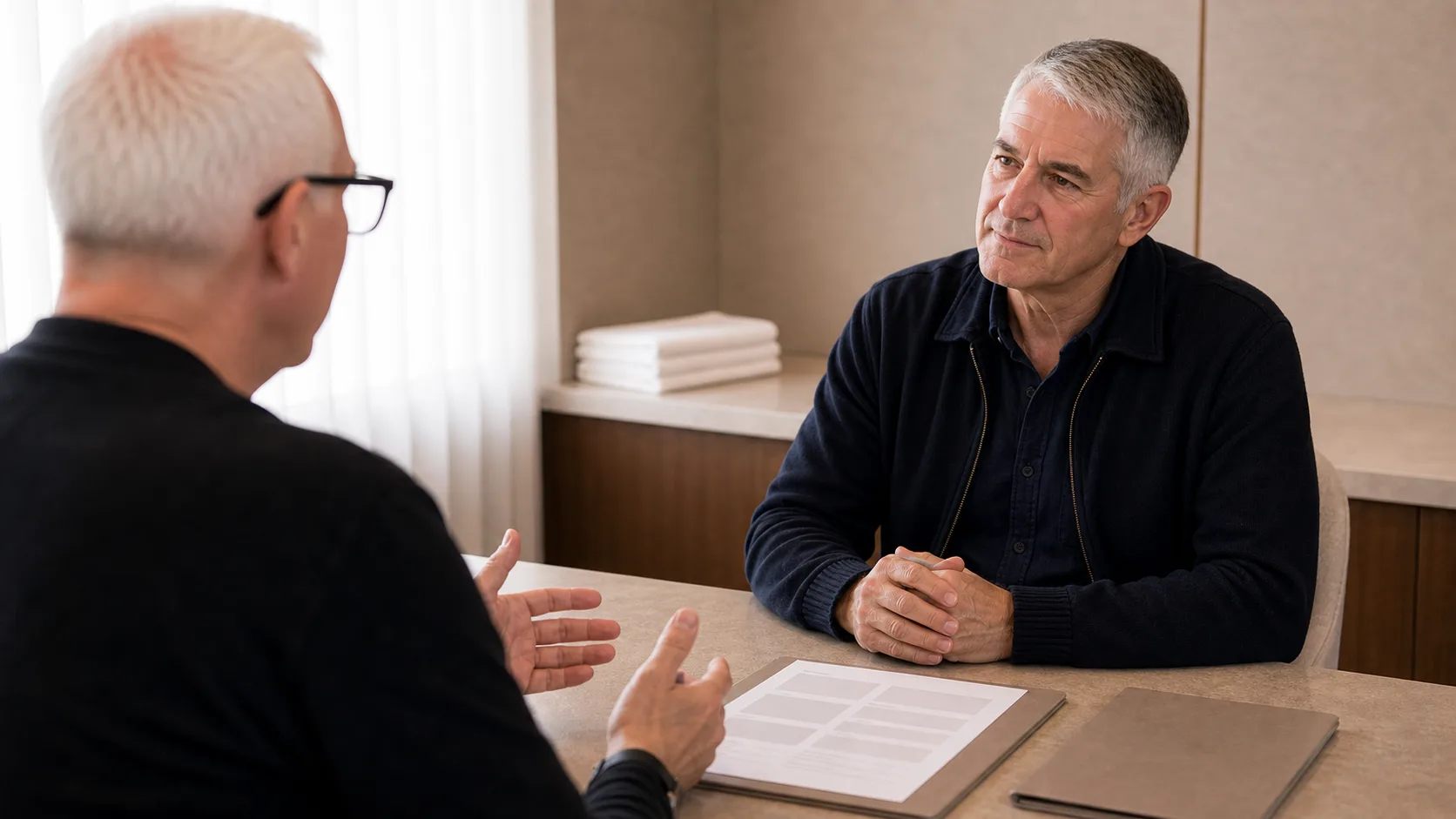
How Can You Prepare Recovery And Cost Questions?
Write down work, caring duties, travel, events and review-access constraints that the surgical practitioner should understand. Ask what support and follow up would be required for the plan being discussed, rather than relying on a general recovery estimate.
Ask for cost information that makes the proposed care and follow up clear, including which possible additional costs need discussion. Compare that information alongside risks, realistic limits, alternatives and practical commitments, not as a stand-alone price.
Healthdirect’s facelift information provides Australian background on questions about risk, recovery, practitioner selection and written costs. It does not replace the individual surgical consultation.
What If You Need More Information Or Time?
Write down which questions remain unanswered and ask what records, further assessment or later discussion would help. You can also ask what would change if you wait or decide not to proceed.
Incomplete health information, unsettled expectations, poor timing or difficult follow up can require a different next step. A question list should make uncertainty easier to discuss, not create pressure to reach a decision at one visit.
What Should Be Clear Before You Decide?
- Which concern the surgical practitioner has assessed and what remains outside the proposed plan.
- The personal risks, realistic limits and alternatives that were explained.
- The recovery, support and follow-up arrangements that would apply.
- What the written cost information includes and what needs clarification.
- Which further questions or information you need before deciding.
If a description is unclear, ask for it to be explained in everyday language. A useful record contains the answer and the next step, including when the answer is more information or another review.
Which Guide Fits An Earlier Question?
If the unresolved question is whether to seek a clinic consultation, a surgical opinion or another health pathway, use the decision guide. If you want to understand the difference between clinical and surgical scope, use the scope comparison.
This list is for preparing the questions you want answered by a qualified surgical practitioner. It does not require a Core Aesthetics booking first.

Common Questions
Who is this facelift opinion question list for?
It is for an adult who is already considering a qualified surgical opinion and wants to organise questions and records. It does not decide whether surgery is needed or suitable. The separate decision guide helps with the earlier question of which kind of clinical conversation to seek.
Can Corey assess whether I am a candidate for facelift surgery?
No. Core Aesthetics does not provide facelift surgery, and Corey Anderson RN does not assess surgical candidacy. The appropriately qualified medical practitioner must answer the surgical questions. Corey can explain his nursing scope or consider a separate in-scope clinic concern without replacing that opinion.
What should I ask about what an operation could change?
Ask the surgical practitioner which concern the proposed operation could address, what it would leave unchanged, what realistic limits apply and what remains uncertain. Those answers depend on individual assessment. A general page or comparison cannot provide a personal surgical recommendation.
Which information should I bring to the opinion?
Bring relevant health history, medicines, previous cosmetic care or surgery records, dates where available, and the concern in your own words. Photographs may help explain a change. Mark missing information as unknown and ask the surgical practitioner which further records or assessment would help.
How should I prepare questions about recovery and costs?
List practical constraints such as work, caring duties, travel, events and review access. Ask what individual recovery and support would involve, what the written cost information includes and which possible additional costs need clarification. Consider these answers alongside risks, limits and alternatives.
What if I am not ready to decide after the opinion?
Record which questions remain open and ask what further information, assessment or later discussion would help. You can ask what would change if you wait or do not proceed. A question list is a communication aid, not a commitment to surgery.
Do I need a Core Aesthetics appointment before using this list?
No. This is general preparation information for the surgical conversation. A Core Aesthetics consultation may be useful for a separate question within Corey’s nursing scope, but it does not replace or become a required gateway to the appropriately qualified medical practitioner’s surgical assessment.
Is this for you?
Consider booking a consultation if
- You are comparing non-surgical cosmetic consultation with facelift surgery
- You want to understand whether your concern appears within Corey’s scope
- You value conservative assessment, risk discussion and referral where appropriate
- You are 18 or older and want individual clinical assessment
This may not be for you if
- You want a certain recommendation or a promised outcome
- You need surgical advice, surgical consent or a facelift quote
- You are seeking pressure to choose a cosmetic pathway quickly
- You have an active infection, unhealed skin or unresolved medical concern that needs medical review first
Suitability is confirmed at consultation. This list is general guidance, not a substitute for clinical assessment.