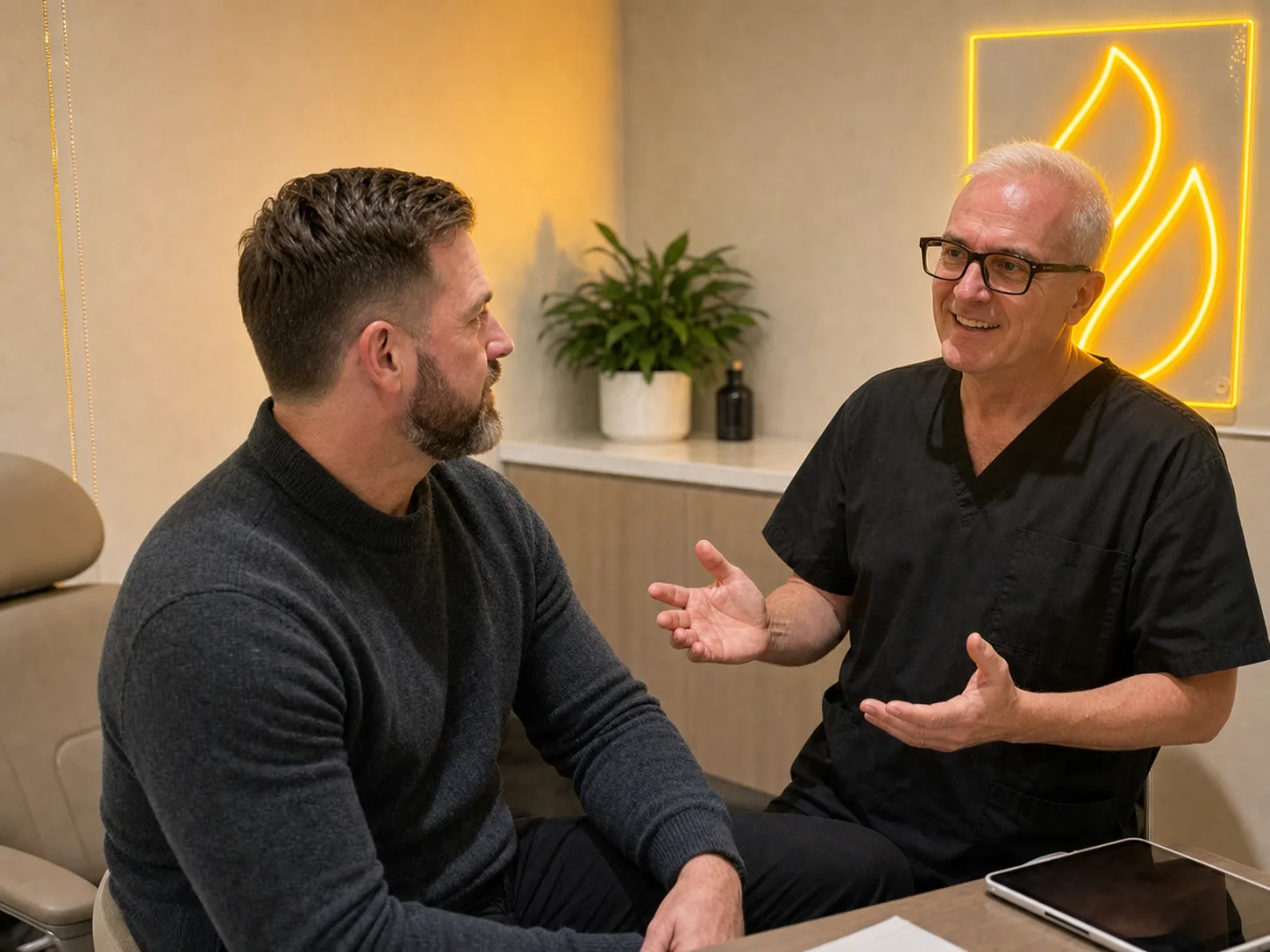
A aesthetic consultation reviews the concern, medical history, timing, expectations, risk factors and whether treatment is appropriate. The aim is to make a careful decision before any plan is discussed. A consultation may lead to treatment planning, a decision to wait, referral, or a recommendation not to proceed.
Why social media warrants specific conversation
Social media has changed the cosmetic intervention conversation more substantively than any other recent influence. The specific patterns it produces include: constant exposure to heavily edited images that present unrealistic comparison standards; algorithmic amplification of cosmetic content for users who engage with it; commercialisation of cosmetic procedures through influencer marketing; emotional response to one’s own appearance distorted by frequent exposure to filtered self images.
The patient population presenting at consultation in 2026 is meaningfully different from the population of even 5 years ago because of this. Patients arrive with reference images that no real person looks like, with expectations calibrated to outcomes that filters produce rather than treatments produce, and with comparison standards that have drifted substantially from what is anatomically possible. The consultation discussion has to engage with this context to produce informed decisions.
The specific patterns social media produces
Filtered self image distortion. Patients who use beauty filters frequently when looking at their own image become accustomed to a filtered version of their face. The unfiltered version begins to look unfamiliar or wrong. Cosmetic intervention is then sought to make the unfiltered face match the filtered one, which is impossible because filters do things that physical reality cannot. The consultation can surface this dynamic and the conversation often involves recalibrating what the patient’s actual face looks like versus what they have grown accustomed to seeing.
Reference image impossibility. Patients arrive at consultation with images of celebrities or influencers and ask whether treatment can produce that result. The honest answer is usually no, because the image itself does not represent a physical reality. The image is the result of filters, professional photography, lighting, makeup, prior cosmetic intervention not disclosed, and often digital editing. Physical treatment cannot produce digital effects.
Comparison spiral. Constant exposure to curated images of others produces ongoing comparison that no individual treatment can resolve. Patients who find their dissatisfaction increases rather than decreases as they consume more cosmetic content are typically in a comparison spiral that is unlikely to be resolved through cosmetic intervention. The intervention provides brief relief but the comparison continues to produce new pressure points.
Algorithmic acceleration. Once a patient engages with cosmetic content on social media, the algorithm typically increases the volume of similar content. The patient experiences this as “everyone is doing this” or “this is normal now” when in fact they are experiencing algorithmic curation. The actual prevalence of cosmetic intervention in their broader social context may be substantially lower than the algorithm suggests.
Influencer marketing dressed as personal disclosure. Cosmetic clinics market through influencers who present treatment as personal experience. The commercial nature of the relationship is often not transparent. Patients who base decisions on influencer content may be reacting to marketing rather than to peer experience.
What realistic comparison looks like
Several reframings can help patients calibrate their comparison reference points more realistically.
The reference for what your face can look like is your own face in unfiltered photography, in normal lighting, in candid (not posed) moments. Comparing yourself to filtered images of others is comparing across categories rather than within them. Comparing yourself to your own filtered image is comparing against a non existent reference.
The reference for what cosmetic intervention can do is real patients who have had treatment and whose unfiltered post treatment images you can see honestly. AHPRA restricts the publication of aesthetic treatment before/after imagery in marketing, which limits the available comparison base. The consultation can discuss what is realistic for your specific anatomy.
The reference for what is normal is your actual social context (family, friends, colleagues, community) not your algorithmically curated social media feed. Most people in most actual social contexts do not have aesthetic treatment; the social media impression that everyone does is algorithmically constructed.
The reference for whether you should pursue treatment is your own assessment of whether the change you would experience would substantively improve your relationship with your appearance. If the underlying dissatisfaction is being driven by social media exposure rather than by your face, treating your face is unlikely to resolve the dissatisfaction.
When social media use itself warrants attention
Some patients describe social media patterns that warrant attention in their own right rather than addressing through cosmetic intervention. Examples include: spending hours per day on cosmetic content; experiencing distress when not using filters; finding that dissatisfaction with appearance increases with social media use; comparing oneself constantly to images of others; using cosmetic intervention as a response to specific posts or content.
For patients in these patterns, the consultation may suggest that addressing the social media dynamic itself would produce more sustainable improvement in body satisfaction than cosmetic intervention. Reducing exposure to filtered images, unfollowing accounts that drive comparison, limiting filter use, or seeking professional support for body image concerns are all options that may serve the patient better than treatment.
The consultation does not require patients to change their social media use as a precondition for treatment. The point is to surface the dynamic so the patient can make an informed decision about whether cosmetic intervention is the right response to what they are experiencing.
When social media informed consideration is appropriate
Not every patient whose consideration involves social media is experiencing harmful pressure. Some patients use social media to learn about treatment options they would not have known about otherwise, to see reasonable expectations for various procedures, to find practitioner reviews, or to understand the recovery experience for treatments they are planning. These uses are often productive and the consultation can engage with them constructively.
Patterns that suggest social media engagement is healthy rather than harmful: the patient researches independently across multiple sources rather than relying on single accounts; the patient can articulate specific personal goals separate from images they have seen; the patient is comfortable with practitioner consultation including the possibility of deferral; the patient does not feel time pressure to act based on what they are seeing.
Specific high impact steps to reduce social media influence on cosmetic decisions
Patients who recognise that social media is influencing their cosmetic decisions in ways they would prefer to reduce can take several specific high impact steps. None of these steps require giving up social media entirely; they involve restructuring how social media is used.
Audit which accounts you follow that drive cosmetic comparison. Most patients in this pattern can identify 10-30 accounts that contribute most of the comparison content in their feed. Unfollowing or muting these accounts has measurable effect on the comparison spiral, often within days. The accounts can include influencers, celebrities, friends who post heavily filtered content, or cosmetic clinics that post aspirational outcome imagery. The audit produces a list; acting on the list produces the change.
Reduce or stop using beauty filters when looking at your own image. Filters trained on heavily edited beauty standards distort the patient’s self perception over months and years. Many patients who stop using filters report that within 4-8 weeks their unfiltered appearance no longer feels wrong, although the early period of adjustment can be uncomfortable. The discomfort is part of the recalibration; the long term result is typically better self acceptance.
Set time limits on cosmetic content consumption. Most platforms allow time limits on specific apps or specific content types. Reducing daily exposure to cosmetic content from hours to minutes substantially reduces the algorithmic feedback loop that increases the volume of similar content over time. Patients who do this often find the broader social media experience improves; the cosmetic content was crowding out other things they actually enjoyed.
Replace cosmetic content with content that is unrelated to appearance. Following accounts about hobbies, interests, ideas, or topics that have nothing to do with how anyone looks dilutes the cosmetic content even without unfollowing accounts directly. The algorithm responds to engagement patterns; engaging with non cosmetic content shifts what the algorithm shows.
Consider periodic social media breaks. A 1-week or 2-week break from social media can reset the comparison baseline meaningfully. Patients who do this report that on returning, content that previously felt compelling now feels excessive or unhealthy. The break does not need to be permanent; the periodic reset is what produces the recalibration.
For patients in significant body image distress related to social media, professional support from a clinical psychologist who works with body image and social media is appropriate. The intervention is well evidenced and substantially more effective for the underlying concern than cosmetic intervention. The anxious about injectables page covers when professional emotional support may be more appropriate than cosmetic intervention.
What healthy social media engagement looks like for cosmetic patients
Not all social media engagement around cosmetic content is harmful. Patients can use social media productively as part of cosmetic decision making if the engagement is structured carefully. The patterns that work tend to involve specific deliberate choices rather than passive consumption.
Following clinic accounts that publish educational content rather than aspirational imagery is often productive. Educational content typically discusses risks, recovery, realistic outcomes, and the consultation process. It is not designed to drive booking through emotional appeal. Patients who consume this kind of content are typically better informed at consultation and have more realistic expectations.
Reading honest patient experiences from people who have had treatment is often useful, with the caveat that any single experience is one data point rather than a statistical pattern. Patient experiences shared with full context (what they had done, where, by whom, how the result settled, whether they would do it again) are more useful than aspirational before after sequences without context. The honesty of the source matters.
Engaging with content that explicitly discusses limitations and trade offs of cosmetic intervention is healthier than engaging with content that presents intervention as universally beneficial. Practitioners and patients who openly discuss what aesthetic treatment cannot do, when it is not appropriate, and when alternatives are better are providing genuinely useful information.
Using social media to identify potential clinics for further research, rather than as a final decision making source, is reasonable. The clinic’s own materials, third party reviews, AHPRA registration verification, and consultation experience should drive the actual decision; social media is one input rather than the input.
Patterns to avoid: passive consumption of filtered self image content; daily engagement with celebrity or influencer aspirational imagery; treating social media engagement as a substitute for clinical consultation; allowing algorithm driven content escalation to dictate which procedures the patient considers; making decisions based on content from accounts where commercial relationships are not transparent. The first time injectables page covers the broader decision framework that applies regardless of the patient’s social media context.
How the consultation engages with social media influenced patients
Patients arriving at consultation with social media influenced consideration receive a consultation discussion that engages with the social media context explicitly rather than treating it as background noise. The clinical conversation is genuinely different in 2026 than it was a decade ago because the patient population presenting is genuinely different.
The consultation typically asks about specific reference images the patient has in mind, where those images came from, and what the patient understands about how the images were produced. Patients who arrive with celebrity reference images often have not engaged with the question of whether those images represent physical reality or whether they reflect filters, professional photography, lighting, makeup, undisclosed prior treatment, and digital editing. The conversation about the gap between the reference and what physical treatment can produce is part of informed consent.
The consultation also typically asks about the patient’s social media use patterns: which platforms, how much time, which accounts, how using filters affects how they see their own face. The pattern matters because some patterns suggest the consideration is being driven by content consumption in ways the patient may want to address before pursuing treatment. The conversation is not judgemental; it is informational, and patients are often grateful to have someone engage with the dynamic explicitly.
For patients whose consultation surfaces that social media is producing distress that warrants attention beyond cosmetic intervention, the recommendation may include considering professional support from a clinical psychologist who works with body image and social media. This recommendation is not “instead of” cosmetic treatment necessarily; for some patients it is “alongside” or “first.” The patient’s autonomy in deciding which interventions to pursue is respected; the clinic does not require professional support as a precondition for treatment.
For patients whose consultation suggests their social media informed consideration is healthy (productive research, realistic expectations, autonomous decision making), the consultation typically proceeds as a standard clinical conversation. The social media context is part of the picture but not the determining factor. Treatment that is appropriate for the patient’s clinical situation proceeds; treatment that is not is deferred or declined.
The consultation framework reflects how Core Aesthetics adapts to the patient population that actually presents in 2026 rather than the population of an earlier era. The first time injectables page covers the broader decision framework that applies regardless of the patient’s social media context. The why we sometimes say no page covers the deferral framework that some social media driven consultations result in.
Clinical accountability and how this guide is reviewed
The clinical content on this page is written and reviewed by Corey Anderson, AHPRA registered nurse (NMW0001047575). The content reflects how Core Aesthetics frames this clinical conversation in practice. Results vary between individuals; the descriptions on this page refer to typical patterns rather than what every patient will experience.
Specific to social media content: this page is intended to support patient reflection on how social media is influencing their consideration. The clinic does not require patients to address social media use; the goal is to ensure decisions are made from informed positions rather than from the algorithmically curated context that constant exposure can produce.
Patients can verify Corey Anderson’s AHPRA registration on the public register at ahpra.gov.au using number NMW0001047575. The Core Aesthetics clinic operates from 12A Atherton Road, Oakleigh VIC 3166, by consultation appointment. All new patient treatment at Core Aesthetics follows a structured clinical consultation, consistent with the September 2025 AHPRA cosmetic procedures guidelines. The team page covers the practitioner background.
Patients reading this page from a social media influenced starting point and who want to engage with aesthetic treatment from a more grounded position often find the consultation conversation provides the calibration they were looking for. The discussion engages with what physical treatment can actually deliver, what realistic outcomes look like for the patient’s specific anatomy, and what a thoughtful approach to long horizon engagement involves. The being turned away or upsold elsewhere page covers experiences at other clinics. The consultation guide page covers the appointment itself.
The patient safety aesthetic treatments page covers the broader patient safety framework that applies to all aesthetic treatment consultations regardless of the patient’s starting context.
Is this for you?
Consider booking a consultation if
- You want to understand aesthetic consultation before deciding whether treatment is appropriate
- You are 18 or older and want an individual clinical assessment
- You value a consultation-first approach with risk and suitability discussed before planning
- You are open to waiting or not proceeding if that is the safer recommendation
This may not be for you if
- You are seeking a not guaranteed outcome or a same-day decision without assessment
- You are under 18 years of age
- You are pregnant, trying to conceive or breastfeeding and are seeking elective aesthetic treatment
- You have an active infection, unhealed skin or an unresolved medical concern in the area to be assessed
Suitability is confirmed at consultation. This list is general guidance, not a substitute for clinical assessment.
Frequently asked questions
What clinical steps are involved when attending Core Aesthetics for Social Media Pressure and Cosmetic Decisions?
Attendance at Core Aesthetics begins with a clinical assessment by Corey Anderson RN that covers the presenting concern, medical history, current medications, prior treatment and suitability. This assessment forms the basis for any recommendation. Treatment is not performed at the consultation appointment. Specific considerations for Social media pressure and cosmetic decisions patients are discussed at the individual consultation.
How does Social Media Pressure and Cosmetic Decisions fit into the consultation-first model at Core Aesthetics?
Core Aesthetics applies a consultation-first model to all patients. This means individual assessment precedes any treatment plan. The consultation for concerns described in topics like this establishes what is present, what may be appropriate and what the realistic outcome range is before any decision is made. Specific considerations for Social media pressure and cosmetic decisions patients are discussed at the individual consultation.
What does Core Aesthetics require from patients before addressing concerns related to Social Media Pressure and Cosmetic Decisions?
A full individual assessment is required before treatment is considered. This covers medical history, current medications, prior treatment, the specific concern and suitability. Patients also need to allow for the AHPRA-required 72-hour gap between consultation and any subsequent treatment appointment. Specific considerations for Social media pressure and cosmetic decisions patients are discussed at the individual consultation.
How does the 72-hour AHPRA cooling-off period apply to topics like Social Media Pressure and Cosmetic Decisions?
AHPRA guidelines require a minimum of 72 hours between the initial consultation and any non-surgical cosmetic procedure. This applies to all treatment areas at Core Aesthetics. Patients attending a first consultation cannot have treatment at the same appointment regardless of the area of concern. Specific considerations for Social media pressure and cosmetic decisions patients are discussed at the individual consultation.
What would lead to no treatment being recommended following assessment related to Social Media Pressure and Cosmetic Decisions?
Assessment may result in no treatment recommendation when the concern is outside the scope of injectable options, when anatomy or medical factors make treatment unsuitable, or when expectations cannot be met. This outcome is honest and acceptable. Not every consultation at Core Aesthetics leads to a treatment plan. Specific considerations for Social media pressure and cosmetic decisions patients are discussed at the individual consultation.
What information should be brought to a consultation about topics covered in Social Media Pressure and Cosmetic Decisions?
A current medication list, details of any prior treatment in the relevant area, how long the concern has been present, how it has changed and any specific questions help the consultation be efficient. Photographs showing how the area has changed over time are also useful where relevant. Specific considerations for Social media pressure and cosmetic decisions patients are discussed at the individual consultation.
How does Corey Anderson RN approach individual assessment for concerns like those in Social Media Pressure and Cosmetic Decisions?
Corey Anderson RN assesses each patient from first principles. Concerns of the type described here are evaluated in the context of individual anatomy, medical history and realistic expectations. A standard protocol is not applied. The recommendation reflects what the individual assessment supports, not what is typical or most common. Specific considerations for Social media pressure and cosmetic decisions patients are discussed at the individual consultation.
What is the two-appointment process that applies to treatment related to Social Media Pressure and Cosmetic Decisions?