A lip proportion for patients from Oakleigh reviews the concern, medical history, timing, expectations, risk factors and whether treatment is appropriate. The aim is to make a careful decision before any plan is discussed. A consultation may lead to treatment planning, a decision to wait, referral, or a recommendation not to proceed.
Most people do not want “lip treatment”.
They want better shape. More balance. A little more definition. And ideally, for nobody to notice why they look good.
“I just want my lips to look more like mine. Just a better version.”
That is the starting point at Core Aesthetics. Proportion before volume. What your face actually needs, not what fills an appointment.
At Core Aesthetics in Oakleigh, lip treatment is a prescription treatment assessed individually at consultation. The approach is proportion before volume, what your face actually needs, not a standard amount applied to everyone.
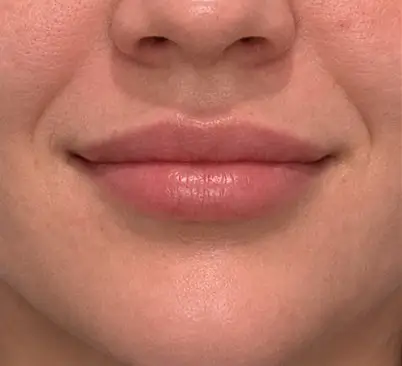
What Lip treatment Actually Does
Lip treatment uses prescription hyaluronic acid based product to enhance the shape, definition and proportion of the lips. Hyaluronic acid is a substance the body already produces naturally. When placed as a volume treatment, it integrates with the surrounding tissue and adds volume, definition and hydration to the treated area.
Done well, the result is lips that feel like yours. Just improved.
What Most People Get Wrong
They focus on size.
What the assessment covers
Good lip treatment is about proportion, the relationship between the upper and lower lip, how the lips balance with the rest of the face, and subtle enhancement of what is already there. Lips do not exist in isolation. They sit within your whole face, and the assessment covers the full picture before anything is recommended.
Types of Results
Subtle enhancement
A slight boost in volume and definition. The most common starting point for first time clients.
Shape and symmetry
Correcting asymmetry, improving the Cupid’s bow shape or refining the lip border.
Hydration and smoothing
Restoring volume and softening fine lines around the lip area.
What Natural Lip treatment Looks Like
A good result
- Soft, not stiff
- Defined, not overlined
- Balanced in the context of your whole face
- The best compliment: “you look good”, not “your lips look done”
A less than ideal result
- Overfilled and puffy
- Lip border extended beyond the natural edge
- Upper lip disproportionately large
- Stiff and unnatural during expression
If you are considering treatment and unsure whether it is appropriate for your concerns, a consultation is the right first step. Book a consultation at Core Aesthetics, Oakleigh.
When Lip treatment Is Not the Right Option
Lip treatment is one of the most requested treatments in aesthetic medicine, and one of the most commonly done poorly. Part of good clinical practice is being clear about when it is not appropriate.
When volume is not the actual concern
Some clients requesting lip treatment have lips that are genuinely well proportioned for their face. What they are seeing as thin or undefined is often a skin quality change or a perioral line concern that volume treatment in the lips will not effectively address. Adding volume to already proportionate lips tends to produce a result that looks obvious rather than improved.
When mid face changes are driving the concern
Descending mid face tissue can create a heaviness around the mouth that clients attribute to the lips themselves. In these cases, treating the lips addresses the symptom rather than the cause. Corey identifies this pattern at consultation and explains what is actually driving the presentation before any recommendation is made.
When the timeline does not allow for proper healing
Lip treatment produces swelling for two to three days and a settling period of up to two weeks. Clients who have a significant event within this window are advised to wait. Treating within the swelling window produces an unrepresentative result and removes the ability to assess the settled outcome properly.
When dissolution is a better first step
For clients who have had volume treatment elsewhere that has not fully metabolised, or that has migrated, attempting to add product without first dissolving the existing material produces an unpredictable result. In these cases, the consultation may recommend a dissolution appointment before any new treatment is considered.
A Typical Presentation
“She wanted bigger lips. What she actually needed was better lips.”
A client in her late twenties presents wanting more volume in her lips. She has seen images she likes and has a clear idea of what she is asking for. At consultation, Corey assesses the natural lip anatomy: the upper to lower lip ratio, the cupid’s bow definition, the philtral column projection, and the relationship between the lips and the surrounding lower face.
The existing anatomy is actually well shaped. The concern is that the upper lip border lacks crispness and the philtrum has softened slightly, making the lips read as less defined than they used to be. The recommendation is a conservative amount of product placed precisely at the vermilion border to restore definition, with minimal volumisation. The goal is lips that look like a sharper version of her own, not a different set.
She leaves with a result that is not what she originally asked for. It is better. And nobody can tell.
The Assessment at Core Aesthetics
Corey Anderson, AHPRA registered nurse, is the sole treating practitioner at Core Aesthetics. Every client is seen by Corey personally for every appointment, from initial consultation through to ongoing treatment and review. His registration is publicly verifiable at coreaesthetics.com.au/verify.
The assessment covers your lip anatomy, your facial proportions, your natural movement and your goals. A conservative first volume is standard, with a two week review to assess the settled result before any decision about adding further treatment. Read about the lip treatment consultation process and about lip treatment swelling stages and what to expect.
Serving Victoria from Oakleigh
Core Aesthetics is at 12A Atherton Road, Oakleigh VIC 3166. The clinic serves lip treatment clients from across Australia’s south east and inner suburbs including Carnegie, Bentleigh, Clayton, Malvern, Brighton, South Yarra and Toorak. Open Tuesday to Saturday by appointment.
Related Reading
Recovery and Aftercare
Swelling and bruising after lip treatment are common and can take several days to settle. The lips are a sensitive area and swelling in the first 24 to 48 hours can make the result appear more pronounced than the final settled outcome. Your practitioner will discuss what the settling process looks like in realistic terms and provide specific aftercare instructions at your appointment. Plan your timing if you have important events in the week following treatment.
How lip treatment actually behaves in tissue
The lip is a moving structure. It is engaged in speech, eating, and expression continuously, and it is one of the more vascular regions of the face. Hyaluronic acid based volume treatment placed in the lip integrates with the surrounding tissue over weeks, softens further over months, and clinically tends to last around six to twelve months in most patients before further treatment becomes a relevant consideration. The longevity is shorter than for structural mid face placement because the constant movement of the lip exposes the product to greater mechanical and metabolic turnover.
The integration period also explains why the result two weeks after treatment looks different from the result on the day. Initial swelling resolves in days. The product itself takes longer to settle into its final shape, and the lip continues to soften and integrate for four to six weeks. Reviewing the result at this point, rather than at day one, is part of how the clinical plan stays accurate. The temptation to add product because the lip has not yet finished settling is a common cause of overcorrection in clinics that do not protect this review window.
Why migration happens, and how it is avoided
Treatment migration in the lip is a presentation seen often enough to be worth understanding. It is the appearance of a soft border above or around the lip line, where volume treatment has settled outside the intended placement plane. It is not a property of the product itself in the great majority of cases. It is a function of placement: too much volume in tissue that is too superficial, too much pressure on tissue that is already saturated, or layered treatments over time that have collectively pushed product beyond its intended boundary.
Avoiding migration is partly about restraint at the point of placement and partly about restraint over time. Treating the lip as a structure that needs gentle, accurate work, rather than a target for visible volume gain, is the consistent thread. Patients who arrive with concerns about treatment migration are usually presenting a treatable situation, but the right next step often begins with partial dissolution rather than additional placement. The conversation around dissolving and resetting is itself a clinical decision and is preceded by an honest discussion at consultation.
Patients planning their first lip treatment often ask how migration is prevented. The honest answer is that placement technique, anatomical respect, conservative dosing, and the discipline to defer if the lip is not yet a candidate are what prevent it. Brand of product, in the great majority of cases, is not the variable that explains the difference. The variable is the practitioner.
The first lip treatment appointment, in detail
Patients booking their first lip treatment often arrive with a fixed picture of the result they have in mind. The picture is rarely the result they actually want once the conversation begins. The most useful work in the first consultation is establishing what the patient is responding to, what they think volume treatment will solve, and whether the proportions of their existing lip support what they are imagining. Sometimes the answer is yes and a conservative first treatment is planned. Often the answer is that what they are responding to is a different feature entirely, or that what they want will compound over time if treated reflexively.
The first treatment is deliberately small. The clinic’s approach to first time lip treatment errs on the side of restraint, partly because lip tissue holds product differently in different patients, and partly because the right next decision can only be made once the existing tissue has integrated with the existing placement. A second treatment, if needed, is planned at review four to six weeks later. Many patients discover at review that the first treatment was sufficient and that the second was a hypothetical they no longer want to pursue.
The structural framing matters here too. Some patients arrive concerned about the proportion of their upper to lower lip; others about a lack of definition at the cupid’s bow; others about the way the lip turns slightly inward at rest. Each of these concerns is a different anatomical question with a different treatment answer. Generic plans treat the lip as a unit. Considered plans treat the lip as a structure with sub areas, each of which deserves its own decision. The conversation about lip shaping rather than lip enlargement is partly about helping patients see this distinction.
Aftercare for lip treatment is unglamorous. The lips are the most reactive part of the face in terms of swelling and bruising. Patients are advised to plan around social and professional commitments for several days. Strenuous exercise and alcohol in the first twenty four hours increase swelling and bruising. Sun exposure and saunas in the first forty eight hours likewise. Light gentle movement and adequate hydration are sensible. Most swelling resolves within three to five days. Bruising, when it occurs, can take a week to fade fully. None of this is a complication. It is what tissue does when something has been placed into it, and the consultation explains what to expect rather than minimising it.
Lip treatments at Core Aesthetics are deliberately spaced. The default rhythm is to plan a single conservative treatment, review at four to six weeks, then decide together whether further work is appropriate. Patients who arrive expecting to leave with a substantially altered lip on day one are reset on this rhythm at consultation. The reason is anatomical rather than dogmatic: lip tissue holds the result more accurately when it has been allowed to integrate before further product is considered, and patients tend to be more satisfied at six months when the treatment was unhurried than when it was layered too quickly. The clinic’s broader documentation on whether lip treatment is worth pursuing in the first place is honest about who benefits and who is better served by deferring or declining treatment entirely. The right answer for some patients is no answer at all. That is part of why the consultation is the appointment.
Cost is the question patients ask first and the question that turns out to matter least once the conversation begins. The fee for a lip treatment at Core Aesthetics is set against the appointment length, the product, and the practitioner time involved, not against the volume injected. Patients who shop on price often discover that the lowest priced lip treatment in their area is priced low because the appointment is short, the assessment is perfunctory, and the practitioner is treating multiple patients per hour. The clinical work that produces a result that holds well, looks proportionate at six and twelve months, and does not require dissolving and resetting later, is not work that scales to short appointments. The clinic does not advertise pricing publicly. Pricing is discussed at consultation in the context of the individual plan, where it can be matched to what the assessment supports. The TGA Therapeutic Goods Advertising Code restricts how prescription aesthetic treatment services can be advertised, and price is one of several aspects that is most appropriately discussed within the clinical relationship rather than across a marketing surface.
Patients who travel to Core Aesthetics from outside the south east often ask whether the consultation is worth the journey. The honest answer is that the consultation is the work, and the journey is justified for patients who value an unhurried clinical conversation more than they value proximity. For patients whose primary criterion is convenience, there are good clinics closer to home and the recommendation is to book locally. For patients whose primary criterion is finding a single trusted practitioner over the long term, the journey to Oakleigh is what most of the regular patient base does, repeatedly, year over year.
Natural Lip treatment Melbourne: What That Means Clinically
Patients searching for natural lip treatment in Melbourne are usually not asking for a dramatic change. They are asking whether lip treatment can respect their existing anatomy, preserve movement, and avoid the overfilled appearance that makes the lip look separate from the rest of the face. At Core Aesthetics, natural looking lip treatment is assessed through proportion, tissue capacity, border definition, and how the lips sit in relation to the chin, nose, and lower face.
The clinical starting point is restraint. Some lips benefit from a small amount of definition. Some need hydration or support at the border. Some are not suitable for additional volume, particularly where previous volume treatment has migrated or where the lip tissue is already full. The consultation explains which of these applies before any treatment is planned.
Lip treatment Melbourne Price and Consultation Planning
Price questions are handled at consultation because the appropriate amount and approach depend on individual assessment. A lower first volume may be appropriate for a first time patient, while correction, staging, or dissolving may be more relevant for someone with previous treatment. The cost discussion therefore sits inside the treatment plan, not outside it as a generic product menu.
Core Aesthetics does not use reduced fee or time pressure pricing for aesthetic treatment. Patients receive a clear quote before proceeding, including the reasoning behind the recommendation and whether a staged plan is more appropriate than trying to complete the whole change in one appointment.
Lip treatment Near Melbourne CBD, Based in Oakleigh
Patients searching for lip treatment Melbourne CBD are often trying to compare central city convenience with a quieter consultation model. Core Aesthetics is based in Oakleigh, in Melbourne's south east, with access by car and public transport. The clinic is deliberately low volume and appointment based rather than walk in or shopping strip treatment driven.
For patients travelling from the CBD or inner suburbs, the relevant question is whether the clinic model suits the decision. Lip treatment is not treated as a quick volume appointment. It begins with clinical assessment, discussion of timing, review planning, and whether treatment should proceed at all.
Areas We Service
Core Aesthetics in Oakleigh provides lip treatment for clients from across our city’s south east and inner suburbs. Click your suburb below to find out more.
- Carnegie
- Chadstone
- Murrumbeena
- Huntingdale
- Bentleigh
- Clayton
- Cheltenham
- Moorabbin
- Oakleigh South
- Oakleigh East
- Hughesdale
- Notting Hill
- Mount Waverley
- Glen Waverley
- Bentleigh East
- Clarinda
- Highett
- McKinnon
- Dingley Village
- Clayton South
- Wheelers Hill
- Springvale
- Noble Park
- Keysborough
- Malvern
- Malvern East
- Caulfield
- Caulfield North
- Glen Huntly
- Brighton
- Brighton East
- Hampton
- Sandringham
- Beaumaris
- Ashwood
- Burwood
- Burwood East
- Camberwell
- Glen Iris
- Toorak
- South Yarra
- Prahran
- St Kilda
- Elwood
Follow Core Aesthetics on Instagram at @coreaestheticsaus for clinical insights and treatment information.
Is this for you?
Consider booking a consultation if
- You want to understand lip proportion before deciding whether treatment is appropriate
- You are 18 or older and want an individual clinical assessment
- You value a consultation-first approach with risk and suitability discussed before planning
- You are open to waiting or not proceeding if that is the safer recommendation
This may not be for you if
- You are seeking a promised outcome or a same-day decision without assessment
- You are under 18 years of age
- You are pregnant, trying to conceive or breastfeeding and are seeking elective aesthetic treatment
- You have an active infection, unhealed skin or an unresolved medical concern in the area to be assessed
Suitability is confirmed at consultation. This list is general guidance, not a substitute for clinical assessment.
Frequently asked questions
I’m nervous about lip treatment — what should I know beforehand?
Apprehension about lip treatment is understandable. At Core Aesthetics, the consultation explores your specific concerns and goals, sets realistic expectations and ensures you fully understand the process before anything is planned. If you decide to proceed, treatment is carried out with topical anaesthetic and a careful technique. There is no obligation to proceed from the consultation, and taking time to decide is encouraged.
What aftercare is recommended following lip volume treatment?
For 24–48 hours after treatment: avoid vigorous physical activity, extreme heat (saunas, hot baths), alcohol and pressure on the lips. Do not touch, press or massage the treated area as this can displace the product before it settles. Cold packs wrapped in cloth can help with swelling and discomfort. Detailed written aftercare instructions are provided at the appointment.
Is it safe to have lip treatment if I have a history of cold sores?
Patients with a history of herpes simplex labialis (cold sores) are at increased risk of viral reactivation triggered by lip treatment trauma. Antiviral prophylaxis taken before treatment significantly reduces this risk. Disclosure of cold sore history at consultation allows appropriate precautions to be taken. Treatment can generally proceed safely with prophylactic antivirals; the specific protocol is discussed at your appointment.
Will my lips look obviously different immediately after treatment?
Immediately after lip treatment there will be swelling that makes the lips appear larger and less defined than the final result. The treated area may also feel firm or slightly uncomfortable for the first day or two. Planning treatment before a significant social event or photograph is therefore advisable. The two-week review gives an accurate picture of the final result once swelling has resolved.
Can I have lip treatment combined with other facial treatments?
Yes, lip treatment can be combined with other treatments at the same appointment in most circumstances. Common combinations include lip volume alongside cheek or midface volume treatment, or alongside upper face wrinkle treatment. Some patients prefer to have one area at a time, especially for a first treatment, to allow individual assessment of each result. This is discussed at consultation.
How long does a lip treatment appointment take?
The treatment appointment, including preparation, application of topical anaesthetic and the treatment, takes approximately 30–45 minutes. A follow-up review is scheduled at two weeks to assess the settled result.