
Most Australian men will spend more time researching a new phone than they will investigating their options for aesthetic treatments. It is not because they are not curious or because they do not care. It is because walking into a clinic, or even typing the words into Google, still feels like crossing a line that society drew a long time ago. The mens aesthetics stigma is real, and it keeps thousands of men from asking simple questions about their own faces and bodies until a concern has already started costing them confidence at work, in relationships, or in front of a camera. This article is not about convincing anyone to have a procedure. It is about giving men a private, practical way to understand what is available, what the risks are, and whether treatment is even appropriate for them. No judgment, no hard sell, just the facts that have been missing from the conversation for too long.
Table of Contents
- Why the Stigma Exists – A Social and Cultural Hangover
- The Real Cost of Waiting – When Stopsigns Become Regrets
- What's Really Holding Australian Men Back? (The Barriers)
- The Consultation – A Private, Practical Way Forward
- Treatments That Work for Men – What's Actually on the Table
- Australian Context – What's Different Down Under
- How to Choose a Practitioner – Red Flags and Green Lights
- Frequently Asked Questions
- A First Step Without Pressure
Why the Stigma Exists – A Social and Cultural Hangover
The idea that looking after your appearance is a woman's domain is not new, but it has proven remarkably stubborn. For generations, aesthetic medicine grew up alongside the beauty industry, and its marketing, its clinic environments, and its entire cultural vocabulary were built around women. Men were not just absent from the waiting room; they were actively excluded by a narrative that framed any concern about wrinkles, skin texture, or body shape as vain or unmanly.
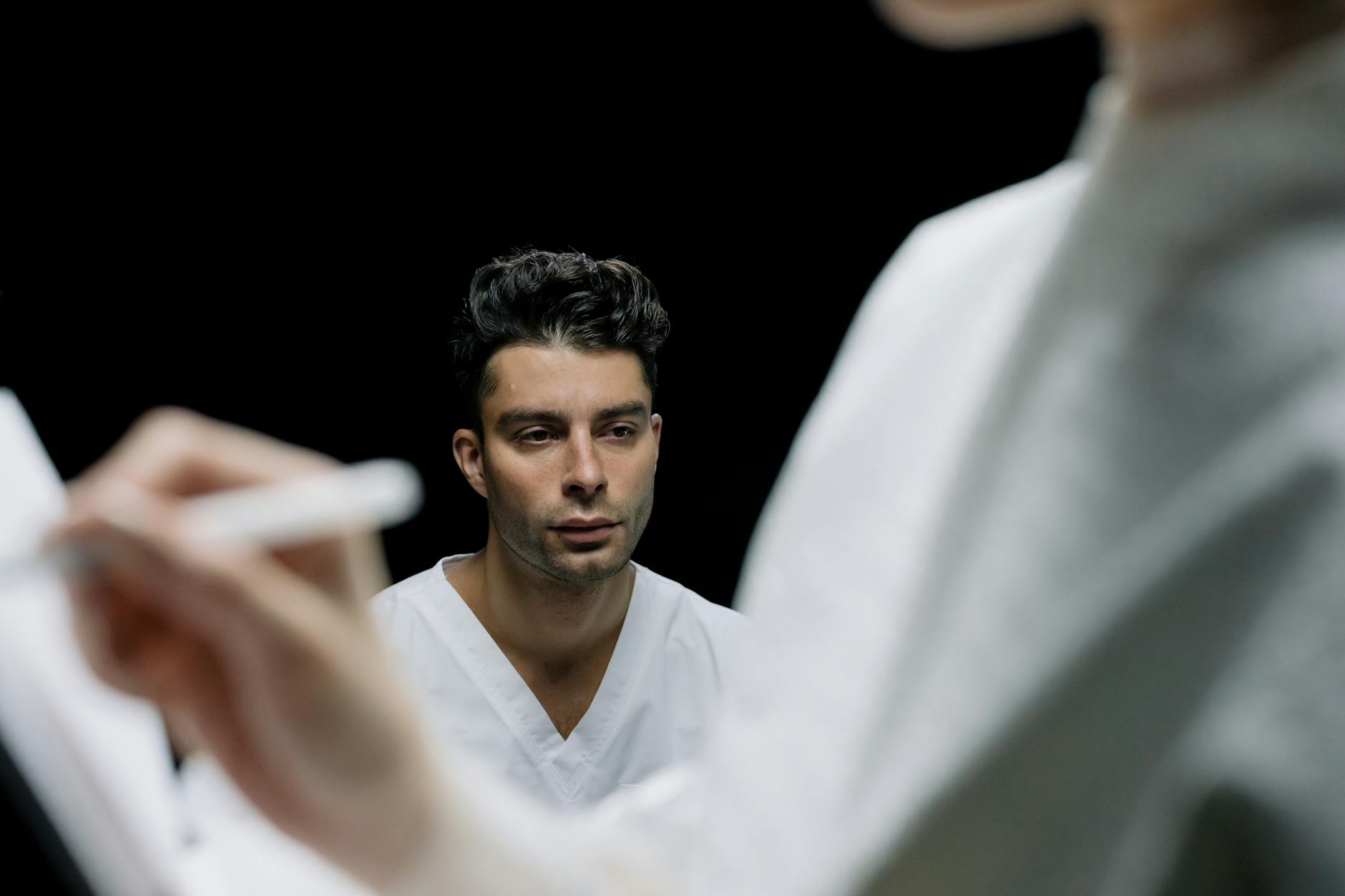
In Australia, this historical baggage gets an extra layer of complexity from tall poppy syndrome. There is a deeply ingrained suspicion of anyone who appears to be trying too hard, whether that is in business, sport, or personal presentation. A bloke who admits to getting Botox risks being seen as someone who has gotten ahead of himself, who thinks he is better than his mates. The media has not helped. Male aesthetic patients are typically portrayed in one of two ways: as celebrities like Simon Cowell, whose frozen expressions become punchlines, or as cautionary tales about procedures gone wrong. There is rarely a middle ground showing a normal guy in his forties who simply wants to look less tired.
Workplace and sporting cultures in Australia reinforce the pressure to maintain a tough, unaffected exterior. Caring about your skin is still coded as soft, and softness is not always safe to show in environments built on banter and blokey resilience. Social media has complicated this further. Platforms like Instagram and TikTok have made aesthetic treatments more visible, but they have also amplified the judgment. Men now see both the possibilities and the pile-on that can follow anyone who is perceived to have had work done.
The Real Cost of Waiting – When Stopsigns Become Regrets
Most men do not wake up one morning and decide to book an injectables appointment. They sit on a concern for months, sometimes years, until a specific moment tips the balance. It might be catching an unflattering angle of themselves on a Zoom call and realising they look exhausted even when they feel fine. It might be a partner making an offhand comment about a deepening frown line, or noticing that every other bloke in a meeting seems to have more energy in his face. These moments are small, but they accumulate.

By the time a man picks up the phone or fills out an online enquiry, the issue has usually started affecting more than just his reflection. Confidence at work can erode when you feel you look older or more tired than your peers, particularly in industries where energy and vitality are quietly rewarded. Socially, men start avoiding photos, stepping out of group shots at weddings or pulling faces to disguise what they are self-conscious about. Some withdraw from dating altogether, convinced that their appearance does not match how they feel inside.
The psychological toll of this waiting period is significant. Increased self-consciousness becomes a low-level background noise that drains mental energy. There is also a clinical reality that gets overlooked: delaying treatment can sometimes make outcomes less predictable. Deeper wrinkles that have been etched in over years of expression may require more intervention than they would have if addressed earlier. The reinforcement loop from social media makes this worse. Men compare their unfiltered, tired faces to the curated, filtered versions of other men and conclude that they are falling behind, without realising that the comparison itself is rigged.
What’s Really Holding Australian Men Back? (The Barriers)
Research gives us a clear picture of what men are actually worried about, and it is more practical than most clinic marketing acknowledges. A study published in a leading aesthetic journal found that 48 percent of men cite fear of looking fake as their top concern. They are not afraid of improvement; they are afraid of being obvious. They want to look like themselves, just a version who has been sleeping well and drinking enough water.
Recovery time and privacy rank even higher, with 52 percent of men worried about visible downtime and the awkward conversations that might follow. In a workplace where taking a sick day for a cosmetic procedure feels indefensible, the idea of turning up with bruising or swelling is genuinely stressful. Men want treatments that fit into their lives without requiring an explanation.
Cost is another major barrier, with 43 percent of men listing it as a concern. The problem in Australia is compounded by a lack of transparent pricing. Many clinics do not publish clear dollar ranges, leaving men to wonder whether they can afford a treatment without the embarrassment of asking and then having to say no. Perceived risk of complications also weighs heavily, particularly around injectables. Male facial anatomy differs from female anatomy in ways that matter clinically: thicker skin, stronger musculature, and a different vascular pattern mean that dosing and technique must be adjusted. Men who have done enough reading to know this may worry that a practitioner who mostly treats women will not get it right.
Finally, there is the barrier of representation. Most clinic websites, social media feeds, and advertising still feature women almost exclusively. When a man cannot see himself in the marketing, he assumes the service is not for him. It is a quiet but powerful form of exclusion.
The "Brotox" Phenomenon – A Shift in Perception
Despite these barriers, something is shifting. Botox treatments for men, colloquially dubbed "Brotox" in a term that has moved from joke to mainstream, have risen by 400 percent since the year 2000 according to data from the American Society of Plastic Surgeons. Celebrity normalisation has played a role. When Australian icons like Chris Hemsworth are rumoured to have had subtle work, or when Joe Jonas openly discusses his injectables, it chips away at the idea that this is a secret shame.
Younger men are driving a significant portion of this change. Gen Z has grown up with front-facing cameras and social media profiles as extensions of their professional and personal identities. For them, preventative treatments are not about vanity; they are about maintenance, the same way they might invest in a good moisturiser or a gym membership. The key distinction that has emerged is that Australian men consistently prefer subtle, natural results that preserve masculine features. A sharper jawline, a brow that still moves, a chin that looks strong but not sculpted: these are the outcomes that resonate. The goal is not to look different; it is to look like you have been taking care of yourself.
The Consultation – A Private, Practical Way Forward
A good consultation is not a sales pitch. It is a clinical assessment that should leave you more informed than when you walked in, even if the answer is that treatment is not right for you. Understanding what actually happens in that room can demystify the process and reduce the anxiety that stops men from booking.
The first part of a proper consultation is a medical history review. A qualified practitioner will ask about medications, allergies, previous procedures, and any health conditions that might affect treatment safety or outcomes. This is not red tape; it is the foundation of safe practice. Next comes a facial analysis, where the practitioner assesses your anatomy, skin quality, and the specific areas of concern. They should discuss your goals in your own words and then translate those into what is clinically achievable.
A critical but often overlooked step is screening for Body Dysmorphic Disorder, or BDD. Research published in a 2025 peer-reviewed study highlights that men are not immune to BDD, and the condition can drive a cycle of dissatisfaction where no result ever feels like enough. A responsible practitioner will ask questions that probe whether your expectations are grounded and whether you are seeking treatment for yourself or to meet an external standard that keeps moving. If treatment is inappropriate, an ethical practitioner will tell you so directly. That honest "no-go" advice is a green flag, not a rejection.
Privacy is a legitimate concern, and good clinics design their operations around it. Discreet clinic environments, after-hours appointments, and locations without visible signage that announces "AESTHETIC CLINIC" to everyone walking past are all signals that a practice takes male patients seriously. The consultation should feel like a professional medical appointment, not a beauty parlour.
Treatments That Work for Men – What’s Actually on the Table
The menu of treatments that work well for men is broad, and understanding the basics helps you ask better questions during a consultation.
Anti-wrinkle injections, known by brand names like Botox or Dysport, relax the muscles that create frown lines, crow's feet, and forehead wrinkles. Results typically last three to six months. For men, dosing must account for stronger facial muscles, which means a practitioner experienced with male patients is essential to avoid a frozen or feminised look.
Dermal fillers restore volume and can be used to contour the jawline, chin, and cheeks in a way that enhances masculine features. Depending on the product and area treated, fillers last between six and eighteen months. The goal with male patients is structural support, not plumpness.
Skin treatments address texture, tone, and sun damage, which is particularly relevant in Australia. Microneedling stimulates collagen production to improve skin quality and reduce scarring. Profhilo, an injectable moisturiser, hydrates and tightens without adding volume. Laser treatments target pigmentation and redness caused by decades of UV exposure.
Body contouring options like CoolSculpting and radiofrequency treatments can reduce stubborn fat on the chest, abdomen, and love handles, areas where diet and exercise sometimes fall short. Emerging technologies such as radiofrequency microneedling with exosomes are also gaining traction for skin tightening and scar revision, offering results with minimal downtime.
Australian Context – What’s Different Down Under
Most of the information available online about men and aesthetics comes from the United States or the United Kingdom. The Australian landscape has its own realities that men should understand before making decisions.
Regulation is a significant factor. In Australia, all injectable products must be approved by the Therapeutic Goods Administration, or TGA. This provides a safety framework that does not exist in all countries. Advertising for medical procedures is also strictly regulated, which means clinics cannot make wild promises or use before-and-after imagery that misrepresents results. If a clinic's marketing feels restrained, that is often a sign they are following the rules.
The Australian climate introduces another variable. High UV exposure across much of the country means men often seek treatment for sun damage and premature ageing that is more advanced than their age would suggest. Reversing that damage requires a tailored approach that accounts for skin quality as well as wrinkles.
On the cost front, Australian pricing is generally transparent once you are in a consultation, but published ranges are rare. As a rough guide, anti-wrinkle injections typically cost between twelve and eighteen dollars per unit, with a single area like frown lines requiring around twenty to thirty units, placing the total between three hundred and six hundred dollars. Dermal fillers range from six hundred to twelve hundred dollars per syringe, depending on the product and the clinic's location. Financing options like Afterpay, Zip, and in-house payment plans are widely available in Australia, but they are almost never mentioned in content about stigma. Knowing they exist can make the difference between a treatment feeling out of reach and feeling manageable.
How to Choose a Practitioner – Red Flags and Green Lights
Choosing the right practitioner is the single most important decision in any aesthetic journey. Green lights to look for include medical qualifications such as a doctor, nurse, or dentist with specific training in aesthetic medicine. A face-to-face consultation before any treatment is non-negotiable. Transparent pricing, even if it is provided in the room rather than online, is a sign of an honest practice. Before-and-after photos of male patients, shown with consent, demonstrate that the practitioner understands male anatomy and aesthetic goals.
Red flags are easier to spot once you know what to look for. Heavy discounts or time-limited offers that pressure you to book on the same day are designed to bypass your better judgment. A lack of medical history review before treatment is a serious safety concern. If a practitioner never mentions the possibility of BDD or does not ask about your motivations, they may be more interested in the sale than your wellbeing.
Two questions worth asking in any consultation: "How many male patients have you treated?" and "What does a natural result look like for my face?" The way a practitioner answers will tell you a lot about their experience and philosophy. For complex or high-risk areas, seeking a second opinion is not an insult; it is sensible due diligence.
Frequently Asked Questions
Is it vain to get aesthetic treatment as a man? No more than going to the gym, wearing clothes that fit well, or getting a haircut that suits you. These treatments are a form of self-care that can restore confidence and help you present yourself the way you feel.
Will people be able to tell I have had work done? When treatment is performed well, the goal is that people notice you look better but cannot pinpoint why. Subtlety is the standard for male patients, and a skilled practitioner will prioritise natural movement over dramatic change.
How much does it cost in Australia? Anti-wrinkle injections typically range from three hundred to six hundred dollars per area. Dermal fillers range from six hundred to twelve hundred dollars per syringe. Exact pricing depends on the product, the area treated, and the clinic.
Is it safe? Yes, when performed by a qualified medical professional using TGA-approved products in a clinical setting. Risks exist with any medical procedure, and they should be discussed openly during your consultation.
What if I change my mind? Most treatments are temporary. Anti-wrinkle injections wear off over three to six months. Some dermal fillers can be dissolved if needed. A good consultation will cover what happens if you decide the result is not for you.
A First Step Without Pressure
The stigma around men and aesthetics is fading, but it still keeps too many Australian men from asking questions that could genuinely improve their quality of life. The best first step is not a treatment; it is a conversation. A private, no-obligation consultation gives you the information you need to make a decision that is right for you, without pressure, without judgment, and without anyone else needing to know.
At Core Aesthetics, we have created a space where men can explore their options honestly and confidentially. Whether you are curious about a specific concern or just want to understand what is possible, our consultations are built around your goals and your comfort. Book a confidential consultation today: no pressure, just honest advice.